

 Filters


 Featured
 Industrials & Manufacturing
 Thought Leadership
Raising the Standard: A New Competency Framework for the Health & Safety Profession
When we last reviewed the Health and Safety Competency Framework in 2019, it was before COVID, before the rapid emergence of AI, and before many of the changes we are now seeing in how and where organisations operate. Businesses are growing quickly and moving into new markets whilst operating across increasingly complex global supply chains and responding to changing legislative, societal and reporting expectations.
At the same time, our understanding of what it means to keep people safe and well is broadening. The profession is increasingly expected to consider not only physical health and safety, but psychological health and safety and the wider factors that influence wellbeing at work. Along with this, organisations are asking more of every function: how are you enabling the business to perform? This question is as relevant for Health and Safety as any other function. Health and Safety has risked being perceived as primarily a compliance activity - something organisations have to do, rather than something that enables them to do great work.
>> Read the full report here
The opportunity for the profession is to change that. This doesn't mean technical expertise matters less. It remains fundamental. But technical knowledge alone isn't enough to create impact. Today's Health and Safety professional needs to understand the organisation they operate within: its ambitions, pressures, people, performance measures and priorities. They need to understand how work affects people physically and psychologically, and be able to apply their expertise pragmatically, influence decisions, enable others and help the organisation consciously manage risk as it grows and changes. Put simply, our role is not just to make work safe. It is to help organisations do great work safely.
And that requires us to keep evolving too. The purpose of revisiting the framework in 2026 was therefore not simply to update a set of competencies. It was to challenge ourselves again as a profession: what does it take to be truly effective and make an impact in Health and Safety today - and what will we need for the future? Our mission hasn't changed. We want people to go home safe and well. But as the world around us changes, we cannot become complacent about the capabilities required to achieve it.
This framework has always been shaped by the profession, for the profession. The first iteration was developed in 2015, followed by a significant review in 2019. In 2026, we returned to the profession to test what still stood up, what needed to evolve and what might be missing. We deliberately sought input from a broad range of Health and Safety professionals, drawing on the Acre network, previous contributors, professional networks, forums and social media to extend participation beyond those already close to the framework.
These participants made up an active working group which had a global footprint. The working group was invited to review the existing framework and contribute through a survey and/or structured interview. We asked four deliberately simple questions: What's missing? What do you disagree with or believe is over-emphasised? Which three competencies matter most for Health and Safety professionals in 2026, and why? What should the framework encourage more of over the coming years? The structured interviews allowed us to probe those answers more deeply, before drawing together the recurring themes and using them to challenge and reshape the framework.
Throughout the process, we maintained one important lens: this is a non-technical competency framework. When themes such as AI and emerging technology arose, for example, we considered the underlying capability a professional needs to navigate them - curiosity, continuous learning, judgement and the ability to critically evaluate what is useful and appropriate - rather than creating competencies around individual technologies that may quickly change. What was perhaps most striking was how much of the previous framework stood the test of time.
This wasn't a case for starting again. Instead, the research highlighted where emphasis needed to shift and where some capabilities needed to become much more explicit. A revised framework was then shared with the working group for further validation, with the final round of feedback incorporated into the 2026 edition. The result is a deliberately simple structure: three Foundations that apply throughout a career, followed by Business Partnering and Leadership levels.
>> Read the full report here
 Industrials & ManufacturingThought Leadership
Raising the Standard: A New Competency Framework for the Health & Safety Profession
When we last reviewed the Health and Safety Competency Framework in 2019, it was before COVID, before the rapid emergence of AI, and before many of the changes we are now seeing in how and where organisations operate. Businesses are growing quickly and moving into new markets whilst operating across increasingly complex global supply chains and responding to changing legislative, societal and reporting expectations.
At the same time, our understanding of what it means to keep people safe and well is broadening. The profession is increasingly expected to consider not only physical health and safety, but psychological health and safety and the wider factors that influence wellbeing at work. Along with this, organisations are asking more of every function: how are you enabling the business to perform? This question is as relevant for Health and Safety as any other function. Health and Safety has risked being perceived as primarily a compliance activity - something organisations have to do, rather than something that enables them to do great work.
>> Read the full report here
The opportunity for the profession is to change that. This doesn't mean technical expertise matters less. It remains fundamental. But technical knowledge alone isn't enough to create impact. Today's Health and Safety professional needs to understand the organisation they operate within: its ambitions, pressures, people, performance measures and priorities. They need to understand how work affects people physically and psychologically, and be able to apply their expertise pragmatically, influence decisions, enable others and help the organisation consciously manage risk as it grows and changes. Put simply, our role is not just to make work safe. It is to help organisations do great work safely.
And that requires us to keep evolving too. The purpose of revisiting the framework in 2026 was therefore not simply to update a set of competencies. It was to challenge ourselves again as a profession: what does it take to be truly effective and make an impact in Health and Safety today - and what will we need for the future? Our mission hasn't changed. We want people to go home safe and well. But as the world around us changes, we cannot become complacent about the capabilities required to achieve it.
This framework has always been shaped by the profession, for the profession. The first iteration was developed in 2015, followed by a significant review in 2019. In 2026, we returned to the profession to test what still stood up, what needed to evolve and what might be missing. We deliberately sought input from a broad range of Health and Safety professionals, drawing on the Acre network, previous contributors, professional networks, forums and social media to extend participation beyond those already close to the framework.
These participants made up an active working group which had a global footprint. The working group was invited to review the existing framework and contribute through a survey and/or structured interview. We asked four deliberately simple questions: What's missing? What do you disagree with or believe is over-emphasised? Which three competencies matter most for Health and Safety professionals in 2026, and why? What should the framework encourage more of over the coming years? The structured interviews allowed us to probe those answers more deeply, before drawing together the recurring themes and using them to challenge and reshape the framework.
Throughout the process, we maintained one important lens: this is a non-technical competency framework. When themes such as AI and emerging technology arose, for example, we considered the underlying capability a professional needs to navigate them - curiosity, continuous learning, judgement and the ability to critically evaluate what is useful and appropriate - rather than creating competencies around individual technologies that may quickly change. What was perhaps most striking was how much of the previous framework stood the test of time.
This wasn't a case for starting again. Instead, the research highlighted where emphasis needed to shift and where some capabilities needed to become much more explicit. A revised framework was then shared with the working group for further validation, with the final round of feedback incorporated into the 2026 edition. The result is a deliberately simple structure: three Foundations that apply throughout a career, followed by Business Partnering and Leadership levels.
>> Read the full report here
 Energy & InfrastructureThought Leadership
The Women Shaping the Future of Clean Energy with Ying Juliana Ko
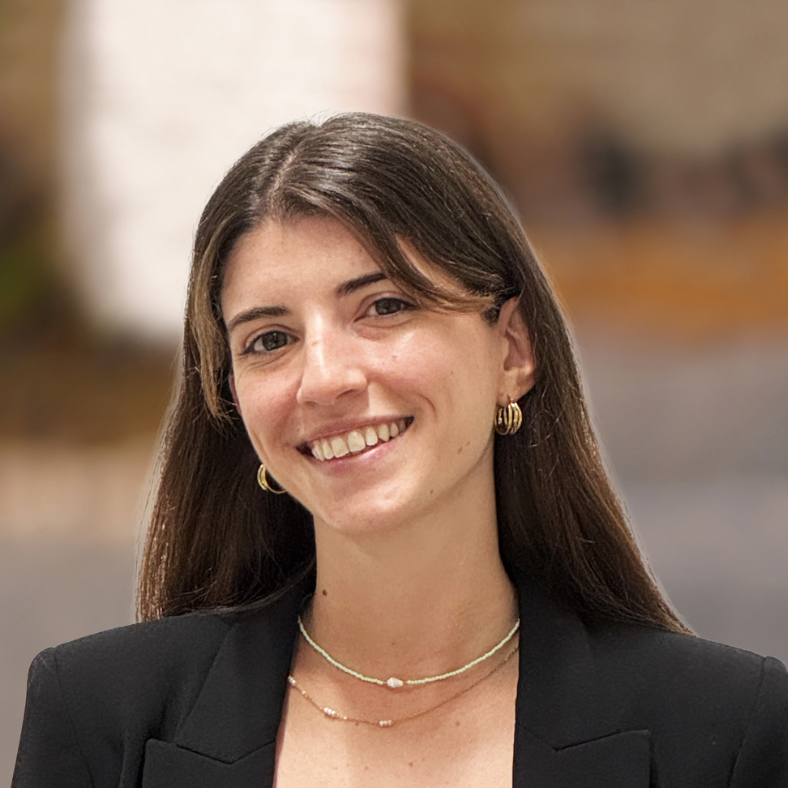
What would the energy transition look like if women were equally represented at the top? It’s an important question when considering better decision-making and stronger business outcomes. In partnership with POWERful Women, Acre continues the blog series uncovering the stories, barriers, and breakthroughs shaping female leadership across the energy sector. Our next guest is Ying Juliana Ko, a project manager at DNV.
Ying has a background in energy engineering and outside her technical responsibilities, she is involved in DNV’s DNI (Diversity and Inclusion) committee, where she contributes to initiatives that aim to create a more inclusive work environment.
How did this D&I initiative start?
It all started as we aimed to achieve certain targets for the business. The difficulty, however, is not just in hiring people, but retaining them. The entire business must make a shift to be more inclusive and to start listening to different voices. We went about this by creating programmes that invited people to talk about different topics.
When I first joined DNV as an intern, I was the only woman in our local office. I often entered a room comprising only of men discussing highly technical topics. The lack of experience at an intern-level naturally affected my confidence, but I was lucky in that my manager’s higher up was a woman, which meant that my performance and development would also be seen and evaluated through a female perspective. This made a big difference to me, and my confidence as I started my career. Representation is not only about being present in meeting rooms but creating a sense of belonging and trust that different perspectives will be understood and evaluated.
As I have grown and progressed internally, I gained the confidence to be part of this transition.
What challenges did you face while you were progressing?
Once a male colleague told me that I should communicate with more confidence and assertiveness in order to convince others about my ideas. I remember thinking, why do I have to convince others about my ideas? Being a woman often means really focusing on preparation and clarity. You first need to be 100% certain about the technical details and then communicate in a confident way. Your ideas must always be supported by data, otherwise they do not earn a seat at the table. And then, of course, you need to be consistent in order to maintain credibility.
As a man you don’t always have to work so hard on the preparation, factchecking, and delivery. It’s much easier to throw ideas about and fine-tune them later. You will still be heard.
How do you think this can change?
Change needs to happen on multiple different levels. The companies need to be intentional about hiring and promoting diverse talent. It needs to be reflected on the targets, the process, and leadership accountability. Companies have to create more opportunities for women as well as showcasing that women belong in technical and leadership roles. The more we normalise it, the more it inspires others to follow. Finally, creating an inclusive environment is just as important as hiring diversity. If the environment is not welcoming, then you will not get the retention needed, despite hiring efforts.
This isn’t without challenges. Sometimes this is a process of change but sometimes you might have to make physical changes too; an entrance, bathroom, or other facilities. It can take time.
What advice would you give to a young woman starting in the energy sector?
Focus on building strong foundations. Stay curious, and don’t be afraid to ask questions. I’d also suggest that you try and build a network early on; peers, mentors, sponsorships, etc.
Why is gender equality important in the energy transition?
As we move forward in the energy transition, it’s important that we bring more diverse perspectives into the process. Approaching net zero is not just a technical challenge, it is also a social, economic, and very political. In many ways, we are really challenging the very foundation of the modern era, which requires collaboration across disciplines and stakeholders.
Inclusive teams tend to be much more innovative and stronger in problem solving, which is exactly what we need to accelerate climate goals. Increasing women’s participation is not only a matter of equity but really is a strategic advantage for the industry and our shared goals.
Acre is committed to driving meaningful change within the energy sector, focusing on appointing impact-driven leaders that can create a more inclusive and sustainable industry. Our interest in this topic stems from a belief that diversity in leadership is essential for better decision-making, stronger business outcomes, and achieving a fairer energy transition. Through this blog series, in partnership with POWERFul Women, we will continue to explore the challenges, successes, and strategies around female representation in energy leadership. Each interview and insight will shed light on what’s working, what needs to change, and how the sector can accelerate progress for the next generation of leaders. Please reach out if you are interested in learning more.
 Natural ResourcesThought Leadership
Our Most Valuable Resource Isn't in the Ground
At 3:30pm on November 5, 2015, a tailings dam near Mariana, Minas Gerais, Brazil began to leak. The Fundão Dam, operated by Samarco and built to store waste from the Germano iron ore mine, sat in the hills above the village of Bento Rodrigues. By 4:20pm, the leak had become a catastrophic rupture.
>> Read the full piece here
An estimated 43.7 million cubic metres of mine tailings surged into the Doce River. The toxic sludge engulfed Bento Rodrigues and Paracatu de Baixo, killing 19 people, displacing thousands, and contaminating hundreds of kilometres of waterways before reaching the Atlantic Ocean. It remains Brazil’s worst environmental disaster. The social, environmental, and economic impacts are still being felt and will likely persist for generations.
Four years later, the Brumadinho tailings dam disaster, also in Brazil, caused by the sudden collapse of an iron ore waste dam, killed 270 people. At precisely the moment when minerals were becoming central to the global energy transition, mining found itself in the spotlight for all the wrong reasons.
The industry response was significant.
In 2020, the Global Industry Standard on Tailings Management (GISTM) was launched by the International Council on Mining and Metals, the United Nations Environment Programme, and the Principles for Responsible Investment. It introduced a globally recognised framework built on zero harm, board-level accountability, independent oversight, transparent disclosure, and planning for worst-case failure scenarios.
Alongside this, the Mining Association of Canada’s Towards Sustainable Mining (TSM) standard has also become a widely adopted industry framework over the last 20 years, focusing on continuous performance improvement across environmental and social responsibility, including tailings management, community engagement, and site-level accountability.
Across the sector, leadership teams have started to rethink and reshape their relationship with the land, communities, investors, and employees.
But standards and frameworks alone do not create responsible mining. People do.
>> Read the full piece here

![[object Object]](/assets/icon/lines-chart.svg)
Join our Candidate Network
Looking for your next opportunity in sustainability, ESG, or climate impact? Join our candidate network by submitting your CV/resume and relevant contact details so our team can get in touch when there's a role that may be suitable for you.

![[object Object]](/assets/icon/split-arrow-up-left-right.svg)
Explore your next career steps
Ready to take the next step in your career? Browse our latest sustainability and ESG roles across industries and regions. Whether you’re looking for executive leadership or a specialist position, your next opportunity starts here.
![[object Object]](/assets/icon/conversation-chat.svg)
Connect with a Consultant
Whether you’re looking to hire top sustainability talent or explore new career opportunities, our expert consultants are here to help. With our expert market insights and a global network, we’ll connect you with the right people to drive impact. Get in touch with our team today.